Can ChatGPT Be Your Personal Assistant? OpenAI Scores It 80%
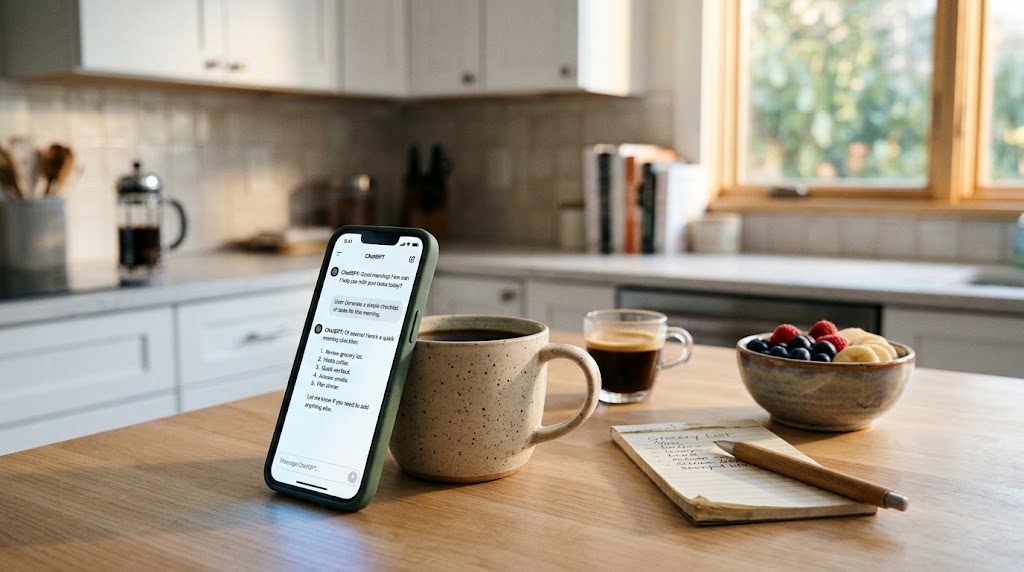
OpenAI wants ChatGPT judged less on what it can write and more on what it can get done. On Monday, the company unveiled an internal benchmark for measuring how well AI handles everyday chores like shopping, budgeting and filling out online forms, plus results for its own models. The pitch is a ChatGPT personal assistant that handles errands, not just answers.
The Test Was Built From Real Time-Use Data and User Input
OpenAI started with large time-use surveys, including the US Bureau of Labor Statistics’ American Time Use survey and the UK’s Multinational Time Use Survey, CNN reports. Since some activities, like sleeping, aren’t things AI can help with, it also asked about 4,000 ChatGPT users what they wished an assistant could do.
About 100 of them then wrote the actual tests: the tasks, the personal context they’d share, and the criteria for success. OpenAI required relevant experience, so anyone proposing a financial-planning test had to have worked with a financial advisor for years.
GPT-6 Astra Jumped From 49% to 80%
OpenAI says GPT-6 Astra, released in September, scored 80% on general everyday-task performance. GPT-5.2, from December 2025, scored 49.3%, according to the CP24 version of CNN’s report.
Some individual tasks scored higher: 93.1% for finding the right kindergarten after a move, 98% for coordinating community volunteers ahead of a flood, and 90.4% for building a meal plan for a parent recently diagnosed with diabetes.
It Builds on Last Year’s Workplace Benchmark
The test follows GDPVal, a benchmark OpenAI released last year to measure AI skills in workplace areas like manufacturing, finance and sales. This one checks the skills an agent acting for a person needs: navigating websites, drawing on chat history and reaching answers that fit that person’s situation.
The Results Come From OpenAI Itself
This is an internal tool, and OpenAI graded its own models on it. CNN notes that results on everyday tasks can be subjective, since steps like shopping or choosing a school are broad and vague. One analysis points out the benchmark measures competence, not trust, and doesn’t settle how far people should rely on AI.
Rivals Are Racing to Build the Same Thing
OpenAI faces pressure from Meta, Anthropic and Google, all building agents that can handle real-world tasks. Al Jazeera reported that OpenAI launched “dots,” an always-on assistant connected to more than 4,000 apps, after Meta released its own assistant, Muse. OpenAI says dots are rolling out to Pro and Business Premium users in eligible markets.
So, can ChatGPT be your personal assistant? OpenAI’s 80% score is a promising sign, but it doesn’t say how often an assistant will get your errands wrong, or what happens when it does. Until independent tests exist, the number mostly shows how OpenAI defines success.