AI Data Center Backlash Grows After Midterm Election Results
Short Answer: Yes, opposition to AI data centers was an obvious issue in the November 2026 midterm elections. CNN’s Voter Poll shows that around 25% of voters considered AI and data centers essential to their vote, and local ballot initiatives overwhelmingly went against new projects. The battle continues on one side, while the industry states that it must gain more trust in communities on the other.
So, what is the AI Data Center Backlash?
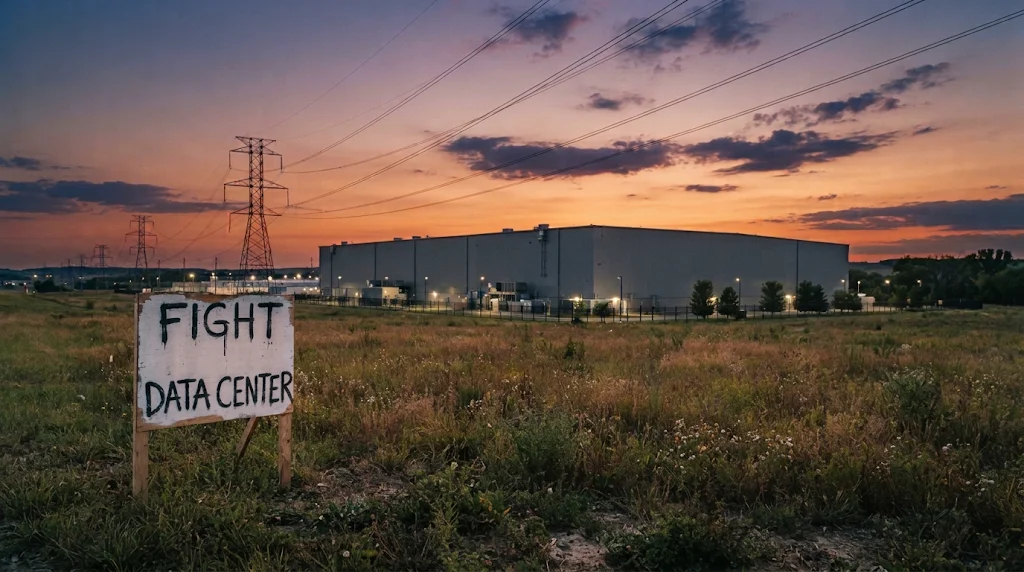
It’s the rising local resistance to the big facilities that fuel AI. In the months leading up to the midterm elections, grassroots campaigns emerged throughout the country, raising concerns about what these projects mean for local communities.
What were candidates’ responses?
A number of them ran on limits. Ohio’s Democratic Gov.-elect Amy Acton campaigned with a “conditional moratorium” that would require developers to cover energy costs and abide by transparency guidelines. Activists also point to the one-year pause New York Gov. Kathy Hochul placed on new construction as a model. In Kansas, Democrat Cindy Holscher, who was leading the governor’s race as votes were counted, called for a pause until more guardrails were in place.
How did local ballot measures fare?
Primarily, they went against data centers. Newsweek says that voters in 40 of 41 local contests voted against development, approving 27 restrictive or opposing measures and rejecting 13 supportive ones. Numbers vary depending on how they are counted, with Fox 26 reporting 44 restrictive measures.
So, why is there voter opposition to this?
There was a degree of skepticism, often mixed with concerns about electricity rates and affordability, the Associated Press found. Stephen Sanders, a Republican who established a protest group in the drought-stricken Texas town of Lubbock, cited worries about power and water in the state. Data from AdImpact revealed that more than $380 million was spent on TV ads featuring data centers.
One caveat: Newsweek reports that AI ranked last among the issues influencing voters’ decisions in post-election polls. The opposition was widespread, but it was not the most prominent driver behind many voters’ decisions.
What do opponents and the industry say?
Danielle Ray of No Data Center 502 (NDC 502) in Louisville, Ky., says the fight continues after the election. Her group opposes a project of more than a million square feet, and she worries people will relax now that the votes are counted. The industry group, the Data Center Coalition, says that developers still need to build trust with officials and communities and is aware that many winners had pledged moratoriums. President Trump has supported data centers and stated that communities that oppose them risk falling behind economically.
What does it mean for the AI industry?
AI businesses require power, land and permits, and all of these depend on support from their communities and political entities. Expect more conditions on projects, more negotiations over energy costs and more local votes.